Inside a Guitar-Hobbyist’s Burnout
I have been teaching 8-string guitar students for about two of the two-and-a-half years that I have been running Eight Metal Strings. I have had the pleasure of meeting learners and hobbyists from all over the world: Germany, England, Belgium, Russia, Denmark, Australia, Canada, Saudi Arabia, and the USA. A few have stuck with me for the full two years (shout out to you diehards), but most, understandably, come and go as their lives get busy and the world flows through various states of “on fire.”
With so many students disappearing after only a handful of lessons together, I’ve had to deal with my share of self-doubt about my teaching abilities. And once I moved past those feelings, I also spent time thinking of all the external factors that may have caused my students to quietly fade away: moving, having a child, financial strain, starting school, getting a new job, conflicting schedules, a medical emergency, or life just getting too chaotic.
Recently though, I’ve been having some conversations with students, past and current, and getting some actual feedback about what has been going on. From these conversations, it is becoming clearer their leaving doesn’t have to do with my teaching, nor even the world being on fire. There is another, more insidious problem going on within the walls of their home studios.
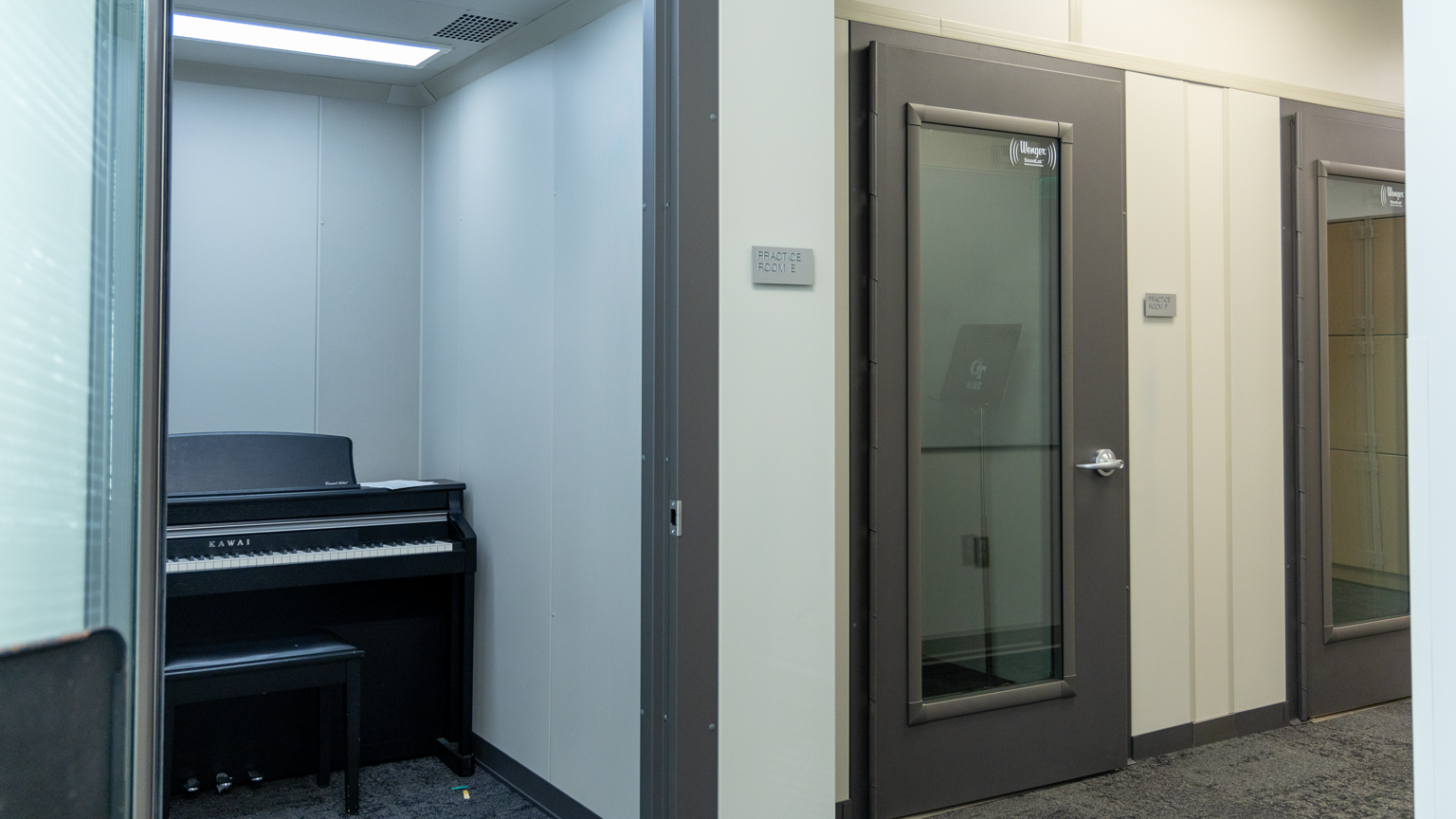
Modular practice rooms - not exactly the ones from my school but similarly claustrophobic.
Before getting to the problem, I want to provide some context for it and why it may have flown under my radar for so long.
My musical journey is fairly typical of someone who was looking to become a professional musician: I started playing when I was young (around eleven years old), became obsessed with the challenge of the instrument, consumed as much increasingly complex music as I could, and practiced hard enough so I could eventually go to a university music program.
While at university, I was exposed to an overwhelming amount of talented and driven young musicians who were all just as passionate about learning and playing music as I was, if not more. During class hours, there would be lines for the practice rooms as everyone tried to get in their minimum three hours of practice per day (while also avoiding the room in which that one overly-dedicated student camped all night). The common problems for this brand of musician were repetitive strain injuries, not being able to afford new strings or reeds, not eating or exercising enough, and not finishing their actual school work. Doing the music part was easy – it was the goal and the reward that filled their cups every day. Everything else was secondary, crammed in when they had to give their chops a break.
This, in hindsight, was a strange bubble to be in. It was not a sustainable way to live but passion and youthfulness enabled it. As I would later learn though, this level of effort, care, and unquestioning dedication to the craft is not how most people experience learning an instrument but it had become normalized in my mind. I left school thinking, “this is just how all musicians are.”
Fast forward a decade to my role of 8-string teacher, and this is no longer the world with which I interact. The people I spend time talking to are the ones who took another path in life, one of career stability and predictability, and who are now seeking to reintroduce a creative spark and passion into the fleeting post-work hours of their lives. So, they dig out and re-string their guitars they got as teenagers and rediscover the music they once loved. And maybe (read: definitely) they even buy some new gear as a reward for taking steps to do something for themselves again, after all these years of working hard toward their careers. With the acquisitions of these new toys, they have cemented themselves into the world of the guitar hobbyist – a world I never truly experienced as a music student.

So, now that I have finally figured out who my audience is, let’s get back to the problem I alluded to in the beginning.
There is something is preventing hobbyist guitarists from staying engaged with their practice, long term, and seeing the progress they want. It is tempting to label it as burnout caused by other factors in their lives, or perhaps even just a lack of time - but these are oversimplifications that pull our attention away from the heart of the problem. There is something else going on internally. What I am seeing is a specific type of burnout caused by an absence of positive creative feedback.
Positive creative feedback is the energy that is returned to a person by engaging in fulfilling artistic activities, for example, after completing a personally meaningful creative project or from playing with other musicians, in person. Without these re-energizing activities, effort is only ever expended trying to decide what to practice, wading through learning resources, and in practicing itself. Work goes into the hobby but the hobby doesn’t ever get a chance to give back. Gas is burned but the tank is never refilled…you get the idea.
By digging deeper, we can uncover some of the specific patterns that are contributing to the energy drain so that we can eventually address them. With these, we see the familiar day-to-day experiences that slowly drag people down and away from their artistic practice.
The rapid rate of early progress on the instrument slows and it feels exponentially more difficult to continue improving.
As a hobbyist, life’s responsibilities still have to come first, and they seem never stop coming. As a result, it can feel like there is not enough time or consistency to be able to keep improving.
The lack of progress and momentum leads to a drop in motivation.
Practice continues when it can, but a lack of specific goals and consistency makes practice feel aimless and like a waste of the limited free time that is available.
Stagnation in ability level and unfinished projects lead to feelings of inadequacy and failure.
These, in turn, lead to a heightened self-criticism which can prevent reaching out to musician-friends or seeking new musicians to play with.
Absence of in-person musical interaction keeps practice feeling aimless (since practice-goals often come from what you learn while playing with others).
Lack of musical-human connection also contributes to feeling isolated.
Feelings of inadequacy are exacerbated by seeing the overwhelming number of proficient players on social media.
Feeling down, the void of creative expression is temporarily filled by buying new gear because money is more available than time and energy. This provides just enough joy and energy to start the cycle over again.
Depending on the individual, there are other pieces that can contribute to this cycle, but these are the ones I see most. If the relatability of that list has left you feeling crushed inside, then firstly, you are not alone. This pattern is becoming more and more common with the rise and normalization of isolation in the age of the internet, social media algorithms and their effect on mental health, and the overflowing, paralyzing garbage dump that is “online guitar education.” But secondly, I am also here to tell you that there is a way out of this loop that doesn’t require you to quit your job just so you can practice more.
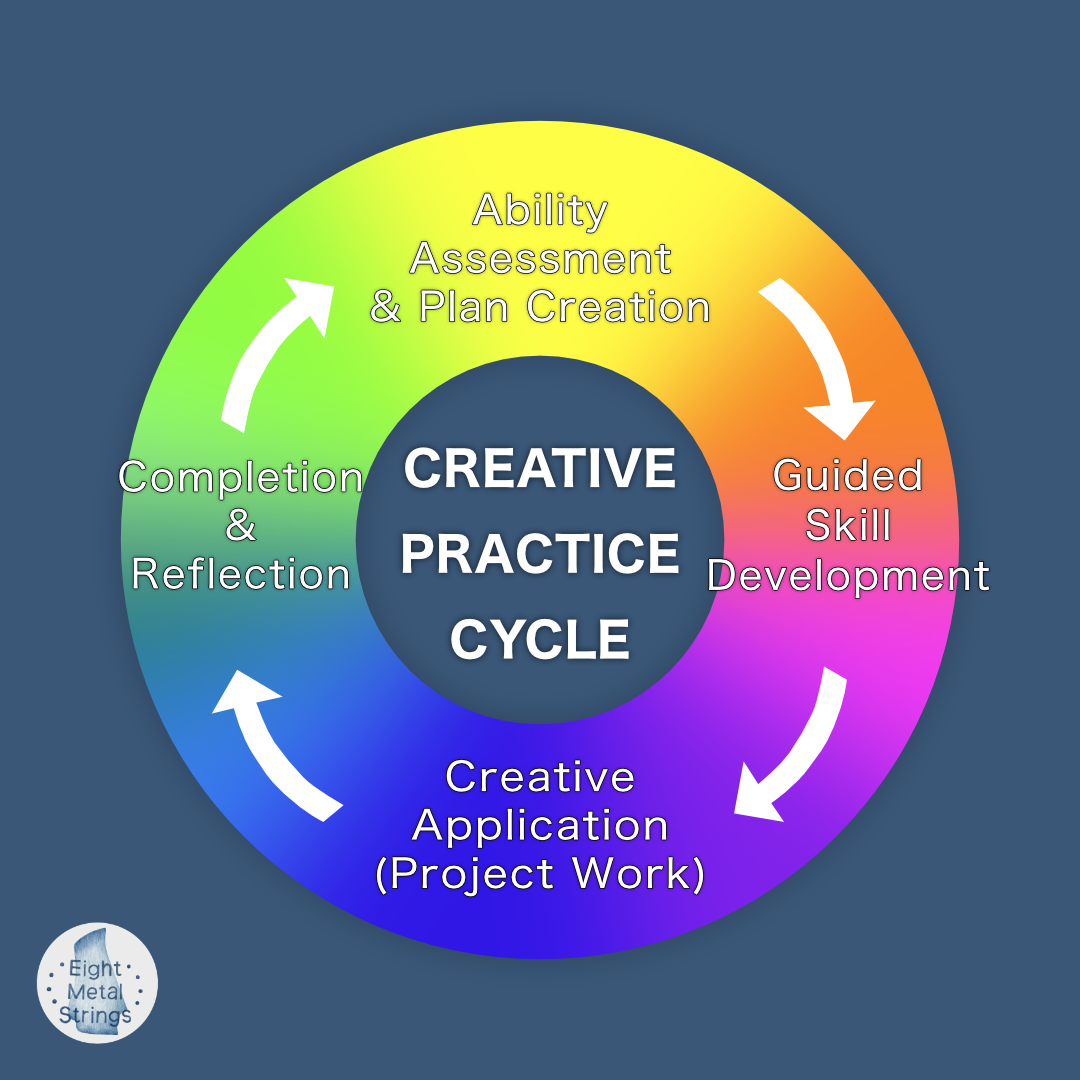
While I can’t do anything to help you reach out to other musicians to set up a jam session or two, I can help on creative project front. My pitch is this: give yourself three months. Those three-months will be a period of focused practice designed specifically and intentionally around a creative project that you work to complete by the end.
By beginning with the end goal in mind, one that is exciting and within your ability level, then everything else will fall into place. I have also found that three months is the sweet spot for project work: it is long enough to make some tangible progress but not so long that things drag on and lose momentum.
Here are some other ways that it can help to break the cycle of energy drain laid out above:
Begins with a clear, creative goal that will be fulfilling and that reconnects the creative energy feedback loop.
A finite time period reduces feelings of the “infinity” or “endlessness” of what you could be working on, reducing overwhelm.
Focused and intentional practice on a select few subjects guarantees noticeable and meaningful progress, which in turn can reduce self-criticism and increase motivation.
The repeatable practice structure can be used again with future projects and can even be aligned with yearly quarters or other pre-existing time cycles.
Projects can build toward long-term goals, like developing materials to bring to a jam session, leading to more social musical interactions.
The process results in something you’re proud to show your friends and family, helping to break feelings of isolation in your artistic practice.
While it does take intentional planning and preparation, there is nothing really complicated about it: three months, one project, and some focused practice. I highly encourage anyone who feels stuck with their creative development to give it a try, no matter your ability level. At worst, you start a project, get a little bit better at guitar, and don’t finish; but at best, it provides a flexible and secure framework that you can mold to fit with your life, giving you repeatable and reliable periods of creative focus and growth, plus some finished projects you can be proud of.
For those who are interested in this idea but know they would be more successful with some guidance and accountability, I do offer this package to do just that. After purchasing it, I will help you develop a project that will be meaningful for you and I will do the heavy lifting to set up your practice plan to get you there. I will also be there to check in with you along the way and help keep everything on track.
Until April 20th (2026) you can use the code ISTILLREADBLOGS2026 for 20% off your purchase of the above package.
And if you’re curious but still not quite ready to commit, click here to book a 30-minute free lesson where we will talk about your goals and what this process would look like for you.
Whatever your path forward, best of luck to everyone out there. Just promise you will keep creating – it’s the antidote to so much of the poison in the world.